Thinking about investing in South Tampa? It is easy to see the appeal. You get close-in neighborhoods, strong lifestyle appeal, major employment anchors, and a buyer pool that often values location over bargain pricing. But in today’s market, the smarter question is not whether South Tampa is investable. It is what kind of investment still makes sense there. This guide breaks down where demand is holding up, what the numbers say, and how to think about buy-and-hold versus value-add opportunities in South Tampa. Let’s dive in.
Why South Tampa Still Gets Investor Attention
South Tampa continues to stand out because demand is supported by more than one factor. The area benefits from its proximity to downtown Tampa, established residential neighborhoods, medical and transportation hubs, and MacDill Air Force Base.
That demand base is meaningful. MacDill supported a workforce of 16,799 people and generated a $4.1 billion economic impact in 2023. Tampa’s population also reached 414,547 in the 2024 Census estimate, giving investors a large local pool of potential renters and future buyers.
South Tampa also offers a mature housing mix. The City of Tampa describes the area as a blend of bungalows, condominiums, and single-family neighborhoods, which creates different entry points and investment strategies depending on your budget and goals.
Demand Drivers Matter More Than Hype
If you are evaluating South Tampa, it helps to focus on the practical reasons people want to live there. Several neighborhoods sit close to downtown, waterfront amenities, parks, medical centers, and major commuting routes.
Davis Islands is one of the clearest examples. The city describes it as a residential area near downtown with local retail, parks, water views, Peter O. Knight Airport, a yacht club, and Tampa General Hospital. Those features help support both resale appeal and rental demand from professionals who want a close-in location.
The broader Tampa job market also supports housing demand. The Tampa area had a civilian labor force of 1.21 million in March 2026, with unemployment at 5.1%. That is not an overheated labor market, but it does reflect a large and active regional employment base.
South Tampa Is Not One Market
One of the biggest mistakes investors make is treating South Tampa like a single pricing tier. It is really a group of submarkets with very different price points and yield profiles.
As of March 2026, Zillow reported average home values of about $1.01 million in 33629, $850,694 in 33606, $612,860 in 33609, $478,168 in 33611, and $409,389 in 33616. By comparison, Tampa citywide averaged $374,888.
Rents also vary by ZIP code. Zillow reported average rents of about $2,533 in 33629, $2,303 in 33606, $2,342 in 33609, $2,234 in 33611, and $2,119 in 33616, compared with $1,950 citywide.
That spread matters because higher rents do not automatically mean stronger returns. In the premium core of South Tampa, pricing often rises faster than rent levels, which can compress yields.
What the Rent and Price Data Suggest
On a rough gross annual rent-to-value basis, the numbers point to a clear pattern. ZIP codes like 33629 and 33606 appear more appreciation-driven, while 33611 and 33616 look closer to citywide yield levels.
Using the March 2026 Zillow figures, rough gross annual rent-to-value ratios come out to about 3.0% in 33629, 3.2% in 33606, 4.6% in 33609, 5.6% in 33611, and 6.2% in 33616. Tampa citywide is also about 6.2%.
These are only rough indicators, not full underwriting metrics. They do not account for property taxes, insurance, vacancy, HOA fees, repairs, or capital expenditures. Still, they highlight an important truth: in much of prime South Tampa, you are often buying location, long-term demand, and resale liquidity more than immediate cash flow.
Rent Growth Is No Longer a Safe Assumption
If your strategy depends on sharp rent increases, South Tampa deserves a more cautious look. Zillow currently labels Tampa’s rental market as cool, and the citywide average rent was down 1.4% year over year as of March 31, 2026.
At the ZIP level, rent trends were mixed. Zillow showed year-over-year rent growth of 3.1% in 33629, 0.7% in 33606, and 0.7% in 33611, while 33609 was down 0.5% and 33616 was down 2.9%.
That does not mean South Tampa is weak. It means you should underwrite conservatively. The market looks more favorable for investors who can succeed with modest rent growth rather than needing aggressive increases to make the deal work.
Inventory and Market Pace
South Tampa also remains relatively liquid, though not every segment moves at the same speed. As of March 2026, Zillow reported for-sale inventory of 194 listings in 33629, 124 in 33606, 153 in 33609, 243 in 33611, and 93 in 33616.
Median days to pending ranged from 44 days in 33611 to 66 days in 33609, compared with 38 days citywide. That suggests buyers are still active, but premium price points and certain product types may take longer to move than the broader Tampa market.
For investors, this is useful on both the front end and the exit. You may still find solid resale demand in South Tampa, but you should not assume every property will trade instantly just because the location is desirable.
Best Fit for Appreciation-Focused Investors
Some South Tampa neighborhoods are best viewed as premium, appreciation-led plays. In these areas, the likely upside comes from location quality, renovation execution, and future owner-occupant demand.
Davis Islands, Hyde Park, and Beach Park
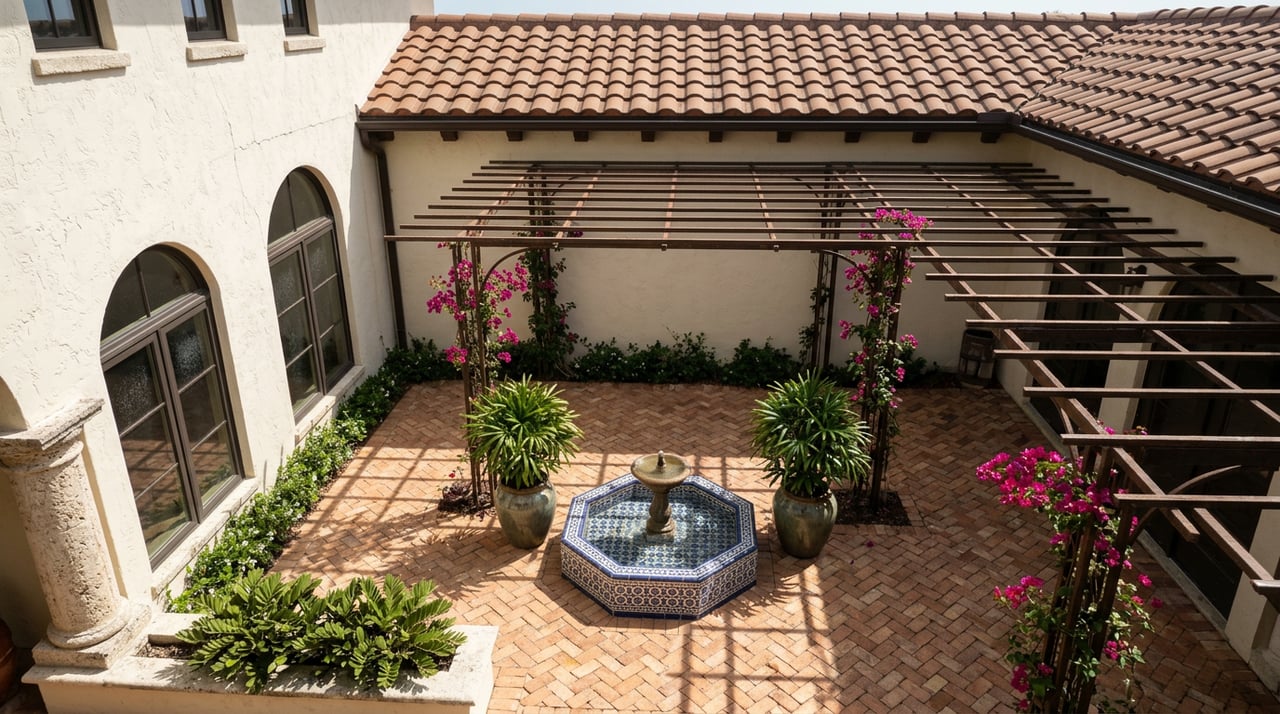
Davis Islands, Historic Hyde Park, and Beach Park fit this profile well. The city describes Davis Islands as a unique island community with water views, parks, retail, and major institutions nearby. Historic Hyde Park is known for its older homes and ongoing renovation activity, while Beach Park is associated with large lots, winding streets, and notable Mediterranean-style homes.
These are usually not the places to chase immediate yield. They tend to make more sense if you are buying quality, improving a property thoughtfully, and planning for a future resale to an owner-occupant who values the location.
If you are considering a renovation in Historic Hyde Park, due diligence matters. The city notes that Hyde Park’s local historic district was expanded in 2023, which can affect design review for certain projects.
Best Fit for Value-Add Buyers
Other South Tampa areas may offer more workable entry points and more visible renovation angles. These neighborhoods tend to appeal to investors who want older housing stock, established locations, and a realistic path to improving value over time.
Ballast Point, Palma Ceia Pines, North Hyde Park, and Interbay
Ballast Point stands out because of its older homes, renovation activity, and location north of MacDill with access toward downtown. Palma Ceia Pines includes a mix of single-family and multi-family households along with nearby services and medical uses. North Hyde Park combines older homes with newer infill, while Interbay benefits from its position near MacDill and the Selmon Expressway.
These neighborhoods often align with light-to-moderate renovation strategies or longer-term holds. They may offer a better balance between entry price and future upside than the most expensive South Tampa enclaves.
Best Fit for Lower-Maintenance Holds
If you prefer a simpler ownership profile, commuter-oriented areas can make more sense. These locations may work well for buyers who want durable demand without taking on a heavy renovation project.
Westshore Palms and Airport Access Areas
Westshore Palms, in ZIP code 33609, benefits from access to I-275, Westshore Boulevard, and Kennedy. The Tampa International Airport area also serves as a major transportation hub about six miles west of downtown.
These locations can be practical for condo, townhome, or lower-maintenance buy-and-hold strategies. They may appeal to relocation tenants, professionals, or buyers who value convenience and connectivity over a trophy address.
Buy-and-Hold vs Renovation in South Tampa
For buy-and-hold investors, South Tampa looks strongest when you prioritize durable demand and resale flexibility. Smaller single-family homes, condos, and townhomes in well-located areas near downtown, Westshore, and MacDill may offer the most balanced profile.
The tradeoff is that carrying costs can be higher than in outer-ring submarkets. In a softer rental environment, you want realistic assumptions on rent growth, vacancy, insurance, and maintenance.
For renovation investors, South Tampa can still work well when location and lot value support the cost of improvements. Older housing stock creates opportunity, especially in neighborhoods where updated homes attract strong owner-occupant interest.
The risk is execution. Historic-district rules, overlay standards, and storm-related due diligence can affect budget, timeline, and scope.
Flood and Due Diligence Matter in South Tampa
This part is too important to gloss over. The City of Tampa states clearly that flood zones and evacuation zones are not the same thing, and buyers should check both.
That distinction matters in South Tampa because storm and drainage considerations can affect insurance costs, renovation planning, and your long-term risk profile. The city also has active drainage-related projects in Beach Park and Ballast Point, which is another reminder that local due diligence should be part of your acquisition process.
Before you buy, it is wise to evaluate not just price and rent, but also the property’s physical and regulatory context. In South Tampa, that can make the difference between a strong investment and an expensive surprise.
So, Is South Tampa Still a Smart Market?
Yes, but with selectivity.
South Tampa still looks smart for investors who want quality locations, long-term demand, and strong exit potential. It looks less compelling for buyers who need immediate cash flow or who are relying on aggressive rent growth to justify a purchase.
In today’s market, the best opportunities are often properties that line up with one of three clear strategies:
- Appreciation-focused holds in premium neighborhoods
- Value-add plays in older, established areas
- Lower-maintenance rentals near key job and transportation nodes
If you approach South Tampa with disciplined underwriting and neighborhood-specific research, it can still be a very attractive market. The key is matching the property to the right strategy instead of assuming every South Tampa address is a win.
If you want a data-driven read on a specific South Tampa neighborhood, condo, or investment scenario, Louis Acevedo can help you evaluate pricing, demand, and exit potential with a strategic local lens.
FAQs
Is South Tampa a good place to buy rental property in 2026?
- South Tampa can still be a good rental market, but it is generally stronger for long-term appreciation and selective buy-and-hold strategies than for high cash flow.
Which South Tampa ZIP codes look better for yield?
- Based on March 2026 Zillow figures, 33611 and 33616 show rough gross rent-to-value ratios closer to citywide levels than higher-priced ZIP codes like 33629 and 33606.
Are South Tampa rents still rising?
- Rent trends are mixed. Some ZIP codes showed small year-over-year increases, while others declined, and Tampa citywide rent was down 1.4% year over year as of March 31, 2026.
Which South Tampa neighborhoods fit value-add investing?
- Ballast Point, Palma Ceia Pines, North Hyde Park, and Interbay may be worth a closer look for investors seeking older housing stock and renovation potential.
What should South Tampa investors check before buying?
- You should review local pricing, realistic rent assumptions, insurance and carrying costs, historic or overlay rules if applicable, and both flood zones and evacuation zones.